Rent Hub - Vehicle Rental App
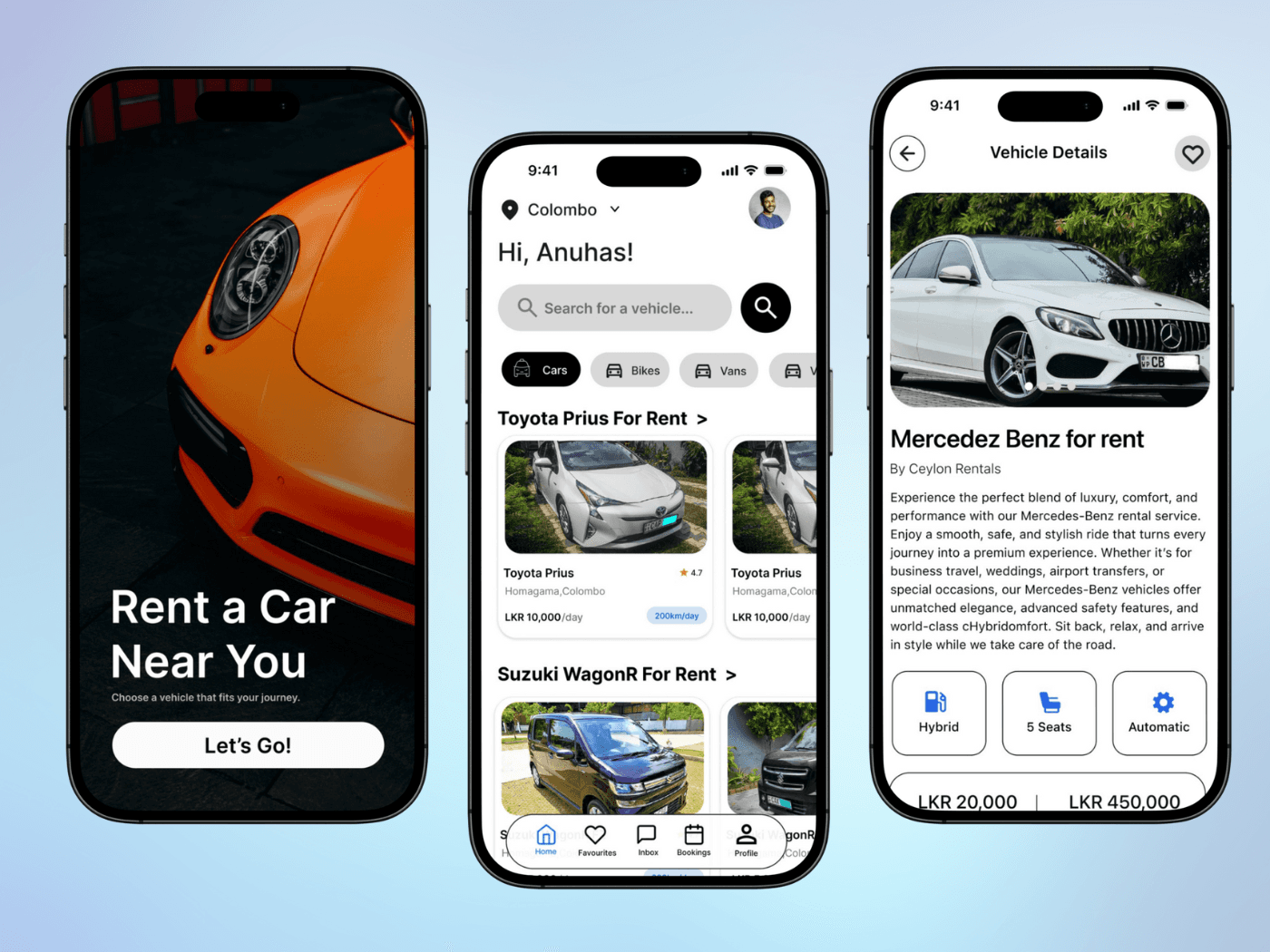
Rent Hub is a mobile vehicle rental marketplace designed for the Sri Lankan market. It connects verified vehicle rental companies with travelers through a centralized platform focused on trust, pricing transparency, and a chat-first booking experience.
Overview
The Problem
The vehicle rental ecosystem in Sri Lanka is highly fragmented. Renters typically rely on unorganized Facebook groups, classified platforms like ikman.lk, or word-of-mouth referrals. This results in: High risk of scams and unreliable listings, Unclear pricing, especially mileage limits and excess charges, Poor vehicle condition transparency. On the other side, rental companies (mostly SMEs) face: Low visibility, Manual booking management via calls and WhatsApp, Frequent double bookings and lost revenue. There was a clear need for a centralized, trustworthy system that works within local expectations.
Project Goals
- Trust: Identity verification for both renters and rental companies
- Clarity: Transparent pricing, including mileage limits and excess charges
- Flexibility: A chat-first booking flow that supports negotiation and familiar payment methods
My Role
Product Designer & Full Stack Developer. I was responsible for: UX research and product strategy, UI/UX design, Interaction design, Frontend and backend implementation.
Process
Research & Discovery
User research revealed three dominant pain points: Lack of trust in listings and vehicles, Hidden costs, especially mileage-related fees, A strong cultural preference for negotiation and direct communication. Renters feared receiving poor-quality vehicles, while hosts spent time responding to inquiries that rarely converted. These insights shaped a solution that balances modern UX patterns with local behavior.
UX Strategy
Instead of forcing an immediate online payment—often a major drop-off point in Sri Lanka—I designed a Request → Accept → Chat workflow. A booking request is sent first. Once accepted, a chat channel opens where users can negotiate pickup location, pricing, and payment method. Offline payment proof can be shared inside the chat. This approach increased comfort and trust without sacrificing structure.
Design Decisions
A single app supports both renters and hosts. A "Switch Role" toggle transforms the UI between a customer browsing experience and a company dashboard—encouraging supply. I also designed a pill-shaped floating navigation bar, which improves reachability and adds visual distinction.
Design & Development
UI Approach
The interface was designed to feel clean, trustworthy, and easy to scan: Typography: System sans-serif (San Francisco / Roboto) for native readability, Hierarchy: Bold pricing and vehicle titles for quick decision-making, Color System: Primary Blue (#2563EB) → trust and reliability, Status Green (#059669) → verified users, Warning Amber (#D97706) → pending actions, Neutral background (#F3F4F6) → reduced eye strain.
Development Highlights
Key features include horizontal category chips for instant filtering, mileage limits displayed directly on listing cards to reduce anxiety, a highly visible "Verified Renter" badge to build host confidence, and a streamlined host dashboard with quick actions.
Performance & Responsiveness
Rent Hub was designed as a mobile-first application for both iOS and Android. The layout was tested across multiple screen sizes to ensure consistent usability, fluid adaptation of floating navigation, and clear readability across devices.
Outcome
Results
The MVP demonstrated a strong user-centered approach tailored to local market needs. User testing validated the chat-first workflow as a key differentiator, significantly increasing user confidence and the likelihood of completed bookings.
Key Learnings
This project reinforced that successful digital products in emerging markets require cultural adaptation, not just localization. Designing for trust, familiarity, and real-world behaviors—such as cash payments and direct communication—was essential for adoption.
Final Thoughts
Future phases include: Payment gateway integration (PayHere / Stripe) for secure online transactions, AI-powered pricing suggestions for hosts based on demand patterns. Rent Hub showcases my ability to design and build user-focused digital products that solve real problems through thoughtful UX, strategic design decisions, and practical technical solutions.